Fun, it’s been over a year since I’ve had the opportunity to talk about Wuko.
1. My take on their canon relationship:
Even if the writers intended it mostly for comic relief it’s surprisingly sweet, and I like that they give Wu a way to be useful that plays to his strengths – and that Mako is supportive of him. Could have done without Wu’s cringeworthy flirting with women, but my theory is that that’s mostly a leftover from an earlier stage of his design kept in because it might convince someone that he’s not gay…maybe.
2. Do I ship them:
Of course. It’s not an exaggeration to say that what finally got me to watch both AtLA and LoK in the first place was reading about Wu and this relationship, not to mention to see Korrasami play out. Definitely canon and possibly canon same-sex pairings, yay.
3. Reasons why I do/don’t ship them;
Wu is amusing and identifiably effete, using some of my own favorite strategies with men albeit with mixed results. I can also see why Mako would be appealing to him, even if he’s secretly an awkward dork.
4. Headcanon, if any:
Ever since I read developer commentary suggesting that Wu spent much of his childhood in Republic City I’ve headcanoned the two of them briefly meeting as children and Wu being enamored of Mako even back then (despite the whole homeless street urchin thing). Whether they’d remember each other years later can go either way.
5. How much do I ship (%):
80ish% Hopefully the comics won’t develop things too far away from their potential at the end of the show, but even if they do they ended on a strong note and possibly an offscreen hookup after the reception.
In which Mako needs a boy who knows the value of a good evacuation.
Please go the Post Series tab on my blog to find links to the rest of this series, under The Legend of Korra header.
Mako: The Zuko Counterpart LoK Needed
At this point there’s not much more I can say about Mako destroying the Colossus. It’s an act of selfless heroism that he performs in imitation of Korra and in service to Republic City with no expectation of reward or reciprocation. The extent of his injuries may be confusing – seriously, how is he fully conscious and able to help in the search for Korra mere minutes later, even though his arm is in a sling for apparently weeks afterward? – but everything else ties together very well for a series-long character arc.
As such, I’m instead going to be analyzing Mako in the context of LoK’s predecessor series, something that – wacky badgermole antics excluded – I haven’t really done before. At first glance there’s not much linking Zuko and Mako beyond the superficial: they’re surly firebenders and romantic false leads (er, to the extent that Zutara actually existed on the show and not just in the fandom). Mako undergoes nothing so dramatic as the extensive villain redemption arc that makes Zuko the nuanced and highly memorable deuterotagonist of AtLA. His position relative to the rest of Team Avatar is never in doubt, and while there are points where his motivations may place him in opposition to other characters he’s still unquestionably a good guy, if not always a likable one.
Mako’s story does however play out on the meta level like a foil to Zuko’s, something I like to think of a hero redemption arc. At the beginning of this series I pointed out that the Mako of Book 1, while heroic, is not the kind of hero that LoK needed as a feminist and female-centered adventure show. He may not be an outright misogynist like Sokka at the beginning of AtLA, but his role in Book 1 hits many of the notes of a male lead, often at Korra’s expense. He’s exceptionally talented to the point that even the villain compliments him, his love life is treated almost as the season’s biggest subplot (and with the way the love triangle is set up Mako’s choice of Korra over Asami is treated with the more agency and narrative weight than either woman’s), and he bonds the most with Korra when she’s at her weakest – and gets rewarded for that, no less. Books 2 and 3 played around with Mako’s original characterization but in the process undercut his heroic status, emphasizing more that he was self-interested and socially awkward. It’s not until Book 4 that his character gets definitively resolved into someone genuinely heroic, someone who can follow Korra rather than try to lead and who can act in service to others rather than as an aloof loner (and hey, Zuko learned that last one too, go figure). The middle seasons of LoK deconstructed the brooding male action hero; the final one rebuilds him into something better.
How much of that can be attributed to Wu? As much as being the prince’s bodyguard relegates Mako to more comic relief scenes, Wu is the one responsible for forcing him out of his professional and emotional comfort zones. He also allows Mako to exercise his protective instincts on someone who is deeply appreciative for them, salvaging what worked well from his Book 1 characterization. Like Zuko with Iroh, Mako spends a significant portion of the end of the series separate from Wu, giving him the opportunity to demonstrate his growth in a broader context. Mako may attribute his development to Korra in 4×08, but Wu is just as important in getting him to that point (literally in that instance, since Wu is the reason Mako talks out his relationship problems in that episode).
Note that I’m not saying that the quality of these two character arcs is at all comparable. Mako’s suffers considerably from two seasons of uncertainty, to say nothing of how this reading only tangibly exists on the meta level. I do though have to remark on the writers’ choice of influence for Mako’s growth: not a relative (like Zuko) or a female love interest, but a twinky young man who seems to have been written specifically to wink at the possibility of a same-sex romance in a season that actually ends with canonical same-sex romance. That in itself ties perfectly into the overall queer trajectory of LoK, both in the literal and academic senses.
Wuko at the Wedding
There’s probably some ironic humor in this episode ending with a wedding between a man and a woman, but the Zhurrick wedding contains enough queer moments that I doubt anyone cares. Whether it’s Zhu Li dipping Varrick on the altar, or this shot of the audience featuring the soon-to-be official F/F pairing sitting next to the possible M/M pairing,
or the Wuko sex eyes, or Wu nabbing himself a hot top through bottoming innunendo or the entirety of Korra and Asami’s conversation, there’s so much more going on with this wedding than the cliché of classical stage comedy that it sort of is. Wu even tops it off with a rejection of the heteronormative institution that‘s previously defined his character (even if the heteronormative aspect of it is only ever inferred, since Wu expresses zero interest in finding a queen or producing heirs). This conversation also acts as a final bit of Wuko-framing-Korrasami, particularly as Korra is quick to forget her earlier irritation with Wu and offer her support for his abdication, which leads first into platonic Makorra and then the Korrasami ending. This in a nutshell is Wuko’s final contribution to the deconstructive narrative of LoK, playing into the setup for Korrasami while also looking back (with some humor) on the character growth Mako has undergone as a result of their relationship. The political ramifications of Wu’s abdication may be uncertain, but I take this final moment of understanding between Wu, Mako, and Korra as confirmation that, in spite of his poor first impression, Wu is definitively in with Team Avatar. The only question left about Wu at the end of the series – aside from whether he’ll show up in the sequel comics and whether he finally got some from Mako of course – involves the comment about his singing career. Euphemistic recognition of his own campiness, or a serious albeit woefully misguided career goal? Both?
I think there’s merit too in the ambiguous note that Wuko ends on, as it reminds the audience of the typical course of homoerotic subtext in fiction just before the show completely subverts those expectations in the final scene. Wuko has been teased with varying degrees of seriousness but remains only an intriguing possibility, not unlike what Korrasami was up until the very end of this episode. The double political and romantic function of the conversation between Wu and Mako is I believe sufficient reason for them to take precedence over various other characters who probably would have benefited from some attention at the wedding, such as the Beifongs. Obviously I’m biased when I say that I don’t really have a problem with the amount of screentime Wu receives in this crowded season, but here in particular (as in 4×03, when he was actually important to the main plot) it’s well-justified.
Avatar-verse M/M Slash and What Wuko Does Right
There, then, stand Mako and Wu at the end of the series: single and ready to mingle, with just enough nods toward a prospective relationship to almost-but-not-quite equal the Korrasami hand clasp. That was how I was going to close thisseries as well, perhaps with some remarks on queer relationships in fiction and how they often lean on the power of potential as opposed to explicit confirmation. However, last month mostlymilkwood published a series of graphs on LoK fanwork for Korrasami Week, quantifying the extent of Korrasami’s popularity in the fandom. Incidentally, one of these graphs is relevant to this topic:
As accustomed as I am to the prominence of M/M slash in online fandoms, these results were a little surprising. It’s certainly understandable why Wuko isn’t the most popular of ships: Wu is only in one season, his characterization (both the twink stereotype and the condescending flirtation) is controversial, his design – scrawny, big ears and nose, large and expressive eyebrows – says comic relief rather than serious love interest, and the above-noted, canonically-supported dominance of Korrasami offers an overwhelming competing interest for many fans of slash (particularly since F/F is so much harder to find in fandoms). It makes sense that, even if Wuko is technically the most popular M/M pairing in LoK, it’s just a drop in the bucket compared to a number of canonical, non-canonical, and formerly canonical pairings. In the interests of further analysis though I did some digging into AO3′s archives myself to see how M/M pairings fare in the AtLA fandom. Here are the numbers for what I found.
Sokka/Zuko – 210
Zuko/Jet – 114
Aang/Zuko – 97
Aang/Sokka – 13
Bearing in mind that AtLA concluded six years before Book 4 of LoK aired, it’s noteworthy that Wuko’s numbers hold up well in comparison to the equally modest slash following of LoK’s predecessor series. Part of that may be explained by simple narrative circumstances; all of the above AtLA pairings as well as pairings involving Bolin and/or Varrick in LoK have to be written around existing canon pairings (and character death in the case of Jetko), a situation Wuko doesn’t share. Another major factor is the chemistry angle. Wu and Mako have ship tease moments that draw on a number of easily recognizable romance tropes, while the other pairings are either friendly with little to no romantic chemistry or are based on rivalry/hatred interpreted as sexual tension. There’s also the humorous observation about Wuko’s relative lack of competition, that LoK has several times introduced characters who normally would have been slashed, only to have them be brothers, ex. Mako and Bolin, Amon and Tarrlok, even possibly Tonraq and Unalaq. It’s rather remarkable in a pair of series with such generally strong characterization that it feels as though there’s only the one M/M pairing with tangible canonical backing, but I suppose a little solid ship tease can go a long way.
I’ll close this series by paraphrasing lokgifsandmusings when she described Wuko as an attempt by fans to save the show’s creators from their own potentially problematic characterization of Wu. That too may be a factor in the ship’s popularity, the challenge of harmonizing the existence of an effeminate, ambiguously gay comic relief on the same show as Korrasami. For me it’s never been too difficult to reconcile, and the parts of Wu that do seem incongruous have little to do with his implied sexuality. Wuko offers a sweet, complementary relationship dynamic that plays around with stereotypes and romance archetypes to the benefit of both characters, and it’s one with considerable potential for fanwork. Regardless of explicit authorial intent (which I’ve never been inclined to treat as gospel anyway) that’s a noteworthy accomplishment.
Please go the Post Series tab on my blog to find links to the rest of this series, under The Legend of Korra header.
Wu as an Instrument of Mako’s Emotional Growth
Mako is surprisingly inactive in this episode, and it’s easy to assume that he was held in reserve with the main group specifically to set up his big moment in the finale. For this reason he can’t be off doing what is still technically his job and guarding Wu with the refugees*, though their separation leads to his line in the scene above, in which he points out that Wu is still in danger from Kuvira. Aww.
Shippiness aside, this is a major character moment for Mako as well as his brother. Bolin tries to be a voice of reason, putting pragmatism over his love for Republic City and suggesting that they retreat and return to fight Kuvira later when they’re better prepared. Mako’s rebuttal about Wu and the refugees may not be the most logical for a number of reasons (and they’re actually shown to be more in danger from the ground troops than the spirit cannon anyway), but it’s just as important to his character growth as Bolin’s show of emotional maturity. He didn’t have to be the one to object to Bolin’s argument – Tenzin is right there and could have protested that his wife was also in danger – and yet this one not-really-necessary line marks the emotional culmination of Mako’s series-wide arc.
Mako’s respect and concern for Wu was something the prince personally earned (and/or won by being really vulnerable, close enough), but I can’t think of another time in the series when Mako sounds so worried about the general populace of Republic City. One would expect his years of police work to play into that, but unlike his brother Mako has never really been one to help people out of altruism. As a cop he’s mostly spent his time busting gangs – both a way to distinguish himself that makes uses of his unique history and possibly as a form of revenge against any abuse he and Bolin might have endured at the Triads’ hands – and the greatest pleasure he’s seen to take in his job comes from thinking of dorky one-liners to use when making arrests. It may be inferred from how Mako handles panicking new airbender Daw in 3×01 – rigid and aggressive in a situation that calls for anything but – that his lack of sensitivity toward the people he’s serving isn’t a trait he picks up when he becomes a bodyguard. Mako may have cracked a number of high-profile cases, but he wasn’t what anyone (but Wu) would call a heroic cop.
And yet for all that all that, when coupled with the scene with Wu in 4×10 this moment establishes his motivations inside the Colossus in the next episode. Following Korra’s example and using Wu as a specific personal connection, Mako performs an act of self-sacrifice in service to the people of Republic City, to citizens who collectively have given him nothing or shown that they care about him. That’s a huge step up from the Mako of earlier seasons, who only saw the value in protecting those who cared about him and his friends.
A Shared History in a Line: the Value of Compressed Narration
Outside of that one weighty line, though, Mako is barely in this episode, and that somehow makes Wu’s absurd act of heroism all the more heroic (and absurd). That’s not to say that his badgermole plan isn’t a deus ex machina, because this is all the explanation it receives:
Pema: Where did these badgermoles come from?
Wu: The zoo! Mako always hated my singing, but they love it!
No word on how Wu made it safely to the zoo through a city under invasion with only Tu for help, or if his affinity for charming wild animals is an Earth Kingdom royalty thing or a parody of classic animated princesses or…anything, really. This one line does however offer ample opportunities for Wuko speculation, as it hints at a history between them beyond what’s been explicitly depicted on the show, even if it is a characteristically silly one. What this scene lacks in adequate setup however it makes up for by reminding the audience that Wu and Mako’s relationship is still thematically important even when they’re apart. It also conserves screentime in earlier episodes to leave the scene(s) of Wu and Mako at the zoo up to the imagination, a valuable point as Wu has an unusually large amount of screentime already – and arguably at the expense of some other characters’ plotlines or development.
Plus, for all that this is Wu’s greatest moment on the show, it’s still a disconnected and partially comedic subplot in an otherwise completely serious finale. (Okay, Zhurrick, but they’re actually involved in taking down the Colossus, and their romance is played for drama in small doses.) It almost works better not too think about it too much, unless it’s for the obvious ship bait. Of course, with that said….
The “Secret Tunnel” Under Republic City
I missed out on the fandom’s episode-by-episode speculations when the show was still airing, but I’ve learned from reading around on Tumblr that during the run of Book 4 and possibly earlier than that there was the expectation that LoK would in some way reference the Avatar: The Last Airbender episode “The Cave of Two Lovers” in connection with its endgame ship(s). “Two Lovers” is perhaps the most memorable Kataang-focused episode of AtLA, being if I recall correctly the first to consider seriously the possibility of a romantic relationship between Aang and Katara, all tied up in an illuminating bit of worldbuilding and obvious symbolism. How surprising must it have been then when the reference to this episode came not in connection to Korrasami or any other ship but instead in the form of a callback to the comedic B-plot of “Two Lovers”, in which Sokka and a roving band of hippies control badgermoles with terrible music.
And despite the missed opportunity for relationship development, Wu was by far a better option to be handed this particular callback. Not only is it culturally fitting for the scion of the Earth Kingdom to command earthbending animals first introduced into the series in association with the origin story of one of his kingdom’s greatest cities, but it also allows a naturally campy character to flex his charisma and theatrical talents. I’m sure someone’s made the joke that Wu saves the day through the power of (bad) musical theatre, but as with the breakdown in 4×03 it’s an enjoyable and meaningful scene in spite of – really, because of – the stereotype. The flounce in Little Ba Sing Se was about emotional expression and toxic masculinity, whereas this scene seems to convey two lessons. One is a continuation of the trend of people underestimating Wu’s talents only to discover that he’s not the ditzy wimp he appears to be. The other is a comment on the nature of camp: even though Wu’s singing is objectively bad as art or even basic entertainment, it still transcends aesthetic standards to accomplish its intended purpose – whether that’s proving Wu’s heroic worth in- and out-of-universe, or attacking (killing?) the soldiers threatening the refugees. Like most camp, Wu’s musical talents are so bad they’re good, which funnily enough makes the parallel with the “Secret Tunnel” hippies of memetic AtLA fame all the more fitting.
*Just a theory, but Tu and Yin’s roles in the evacuation plot – going with Wu to get the badgermoles from the zoo and serving as an (endlessly adoring) subject for his crooning, respectively – feel like substitutes for Mako and what role he would have played had he been present. It’s doubly good then that he didn’t; not only would he have missed his big heroic moment, but he likely would have died of embarrassment when Wu started literally singing his praises for all the world to hear.
Next time: 4×13, Mako and Zuko parallels, Mako and Wu at the wedding, Wuko as an anomaly among Avatar-verse M/M slash
In which Mako goes spelunking for closure, and Wu gets a montage.
Please go the Post Series tab on my blog to find links to the rest of this series, under The Legend of Korra header.
First of all, despite the subtitle above I’m not going to be talking much about Korra and Mako’s plotline in 4×09. There’s nothing that I could really add to this analysis by got-your-back-always-will on the representative value of platonic Makorra, anyway. Mako isn’t even that heavily involved in the story, only tagging along because he happens to be there and Bolin suddenly isn’t after a cutaway…seriously, he just vanishes and offering the sort of quiet, understated moral support that he’s best at expressing (more on that later). His presence is meaningful without undermining Korra’s agency or development in any way, an all-around improvement from their Book 1 relationship.
Aside from that though Mako has very little to do on his own in these episodes except stand around in the background looking brooding and watchful. The rest of his screentime he shares with Wu. Hooray for convenience.
Wu and the Villainous Raiko Theory
As with quasi-incestuous Wuko, I’ve seen the idea that Raiko is the true masterminding villain of Book 4 floated around a few places in fandom. The theory goes that, by courting Wu’s favor before the coronation (ex. choosing the new king’s advisers and forcing Mako to remain his bodyguard) and continuing to include him in important discussions even though it’s obvious that the prince knows little of politics and nothing of military strategy, President Raiko has positioned himself to control the direction of the Earth Kingdom’s political future. Wu’s decision in 4×13 to abdicate and convert the Earth Kingdom into a democracy modeled on the United Republic would on the surface appear to play right into this theory.
Also as with quasi-incestuous Wuko however, I’m at a loss to understand why this idea is popular. Most obviously it imparts Raiko, a generally unlikeable character who’s consistently cast in the role of obstructive and mostly ineffective bureaucrat, with a level of farsighted political savvy that doesn’t mesh very well with his other policies. As seen in Book 2 Raiko is cautious when it comes to international relations, a natural stance for the leader of a country less than a century old in a setting that has been divided for millennia into exactly four nations. Rulers of the Earth Kingdom in particular seem inclined to contest the legitimacy of the United Republic, so it’s reasonable that after the death of Hou-Ting Raiko would be interested in giving her successor a more favorable impression of his country. Kuvira offers him further incentive to remain in the heir apparent’s good graces, because even as a supposedly more modern despot she still opposes the UR’s right to exist as an independent nation.
Most importantly though, Wu doesn’t need Raiko manipulating him behind the scenes for him to appreciate the United Republic, and to suggest as much undercuts his decision in the finale. It goes without saying that the establishment of a completely new form of government in an already unstable nation is probably not going to go over smoothly, and when one takes out the plot hook potential Wu’s abdication seems dangerously naïve. It is also however the product of his years in Republic City, of the United Republic serving essentially as his adopted nation. The evacuation plotline emphasizes that, though he might try to play it off as a ploy to date Korra, Wu truly is a “man of the people” who genuinely wants to help the citizens of the country in which he’s spent a substantial part of his upbringing. During his radio broadcast he introduces himself as a prince but nonetheless identifies with his listeners and employs his usual lighthearted and slightly off-color charm to win them over. One could argue that Wu’s time spent as a worldly socialite is both what motivates him to spearhead the evacuation and what allows him to carry it out successfully (that and his talent for serenading badgermoles, but even that almost certainly entailed his becoming a regular at the zoo). It’s not surprising at all that he could emerge from that experience with the desire to help the people of his own stricken nation by sharing with them the values of the United Republic, and naïve or not he certainly doesn’t need Raiko’s help to reach that conclusion.
Wu has two arcs in the second half of Book 4, and of the two his emerging political stance is both the more impactful and the more logically plotted. His sexuality arc – for lack of a better way to describe it – is…rather less logical. He apparently resolves in 4×08 to stop pursuing women because “ladies are complicated,” and yet in 4×10 he tells Mako that he still wants to data Korra – that in fact impressing her was the only reason that he proposed a citywide evacuation in the face of Kuvira’s impending invasion. Then in 4×13 he’s changed his mind again and no longer wants to date her, even though nothing at all occurred in the interim that would have made Wu question his demeaning treatment of women.
As out of order as these scenes appear, there seems little way to reconcile them except to make the exchange in 4×10 all about Mako, a bit of foreshadowing/framing for his big self-sacrificial moment in the climax that establishes that his act of heroism is motivated neither by selfishness nor by romantic interest. Wu is then reduced to a narrative accessory for a more important arc, and while that’s not unique to him this season – Bolin and Varrick have a similar dynamic – it is a little disappointing that Wu is the only one of these four characters whose relationship-related resolution displays this kind of structural problem. Is this scene leftover from an older design whose decision to stop pursuing Korra wasn’t coded as a coming out? Is it a consequence of 4×08′s rushed development, with Wu originally reaching this conclusion after setting up Mako’s motivations?
The best I can do for an in-universe explanation for Wu in 4×10 is that he’s deflecting his actual feelings immediately after Mako praises him warmly (because he actually is impressed with the man of the people act), with a dash of the straight guy locker room talk he was trying to pull in 4×08 thrown in for good measure. Why he finally decides to give up that tactic in 4×13 is another issue altogether.
Love in the Details: Mako’s Small Gestures
The Wuko radio scene in 4×11 is meant to be comedic in spite of its serious repercussions. Mako starts a panic because he has no charisma, Wu shares his bathroom troubles with the entire city, and developer commentary comes up with the crack ship Makoperator just because. Despite that however it’s also the capstone of these three episodes’ development of Wu, both individually and in relation to Mako. The prince goes from proposing to trap Kuvira on a prison island with the promise of a paid vacation to impressing everyone around him with a never-before-seen level of competence. Raiko, Lin, and Mako all voice their pleasant surprise at this turnaround, but it’s the moment above that most clearly expresses this shift. Mako placing his hand on Wu’s shoulder after the prince’s broadcast is one of the rare silent moments between the two, with Lin standing there to provide the verbal praise and frame Wu’s speech as a positive since it’s honestly kind of weird and probably shouldn’t have been as effective as it was.
These small gestures of love and support are where Mako excels. Unlike Wu his more dramatic outbursts have not gone over so well, either because they were badly timed (Mako confessing his love to Korra in the Book 1 finale), ineffective (helping Asami with a sting operation, and then reigniting their romance for no reason other than impulse), or actively detrimental (his bossy and aggressive behavior on the rescue mission in 4×07, where his lack of self-control almost gets Wu killed). This is the reason I brought up Mako’s relatively small and quiet role in going with Korra to visit Zaheer in 4×09, because it’s such a departure from their usual bombastic dynamic that displayed itself in full force just two episodes prior. However, it’s exactly what Korra needs at that moment – to know that she has friends who support her even as she goes to confront the source of her trauma alone. On a similar note, it’s useful to observe the contrast between Mako and Bolin’s reactions to meeting their extended family for the first time. Bolin is chatty and weepy and definitely more outwardly invested in connecting with his long-lost family (even when they haven’t yet left Republic City), but it’s Mako’s gift of his scarf to his grandmother that carries the most emotional and symbolic weight of any moment in the family reunion. Mako does not form emotional attachments easily (see Kai, or Korra for a romantic version), and the significance of his scarf as a reminder of his father was established back in the first season, so for him to surrender it to a woman he’s only known for a few hours speaks volumes about his need for a family.
At its best his dynamic with Wu works much the same way. While the prince is more receptive than most to Mako’s awkwardly impulsive moments, as evidenced when Mako tells him off in Little Ba Sing Se, he also seems to appreciate the little things. In addition to the scene above, Wu is also grateful for Mako’s praise after he proposes the evacuation, even if Mako couches it in carefully professional terms that (after 4×08 and possibly even 4×07) no longer seem fully appropriate for their relationship. While this does serve as an excuse to read heavily into short lines and small actions – i.e. the essence of a subtextual relationship – it also parallels what the audience concluded about Wu in 4×08. Just as Wu shouldn’t be forced to conform to a role for which he is not suited – whether that’s the physical strength of conventional masculinity or heterosexuality, either works – these episodes demonstrate that Mako doesn’t need to lose his reserve to express himself in positive ways. After two episodes of bashing him over and over again for his emotional problems, these scenes make for a refreshing followup.
Next time: 4×12, Mako’s priorities going into the finale, Wuko’s unexplored history, “Cave of Two Lovers” parallels
It’s quite a while off, but I’m actually a little surprised that the LoK graphic novel finally has a release date.
*crosses fingers that Wu and the unstable Earth Kingdom plot hook won’t be ignored completely*
In which Wu wants to know where Mako’s tongue has been.
Please go the Post Series tab on my blog to find links to the rest of this series, under The Legend of Korra header.
I considered not even including this episode, or bundling it in with one or more of the following episodes. The first of 4×08′s three vignettes may star Mako and Wu, but the severe constraints that this episode was written under make it difficult to evaluate. We’re watching the low-budget sequel to “The Ember Island Players” of AtLA, and as Varrick helpfully points out this is not the time to think. Its developments and messages are in some case just as unsubtle as its predecessor (snarking at mediocre plotlines and ambiguously-written scenes in past seasons, for instance), but the artificiality of this episode only exists on the meta level; it’s not a stage play or, to return to one of my points about 4×03, a tacky but suspiciously appropriate shopping mall setting. Mako trying to teach Wu self-defense while the two of them learn more about each other is a completely logical and natural premise for a plot at this point in their relationship, but it’s contorted into a framing device for a clip show.
Still, the Wuko scene of 4×08 is good for more than simply telling us that the love triangle sucked and Mako fails at romance. This is the episode that reveals that Wu is not going to be sidelined for the rest of the season, when he very easily could have been after 4×07. There’s also the point that, though it’s the first of the three, their scene together rests in an uncertain emotional space between the pure comedy that is the Varrick and Bolin scene and the intimate Korrasami scene that could have naturally progressed to actual romance had Tenzin not butted in. The Wuko scene even comes with its Tenzin equivalents in Yin and Tu, who were almost certainly included to cut some of the homoerotic tension. They’re sparring in a gym and talking about their feelings; can that scenario end any way but horizontal? Mako and Wu in the gym work as a good prelude to the Korrasami scene at the heart of this episode because it works so well to nod to the possibility of same-sex romance, while also significantly advancing the process of putting the love triangle to rest for good.
It’s important to understand that 4×08, and the Wuko scene in particular, function on three different narrative levels that don’t always mesh perfectly together:
1) the frame story, and how it relates to the current Book 4 storyline and characters
2) the clips from past seasons – what’s included, what isn’t, and how the characters listening to the story react to them
3) the meta commentary from the developers, ex. Tu’s sudden bit of wisdom about Mako and disappointment, Bolin clarifying that he and Asami are just friends, all of Varrick’s asides about the process of making a TV show mover
I’m going to try to ignore the third level, because as humorous as those lines may sometimes be they mostly speak for themselves.
The Royal Wimp
Grandma Yin is a designated Out of Touch Old Person; she holds the tyrannical Hou-Ting in reverence, refuses to leave her home even as it’s burning down around her, and is the only character to comment unfavorably upon Korra’s masculine-coded appearance. As a result of these scenes in the previous season, her coddling of Wu comes with a fair amount of ironic humor. As prompted by this moment, I gather that one of the unspoken takeaways of the 4×08 Wuko scene is that Wu shouldn’t have to change himself; really, I’ll take his “ladies are complicated…I better just focus on being a better king” at the end as the closest thing to a coming out as he ever gets.
That would be a positive message, and a good lead-in for the Korrasami scene, except 1) there actually is a significant threat to Wu’s life and gaps in his bodyguard’s vigilance that would justify toughening him up a little, 2) the follow-through on this revelation is delayed until the finale, since in 4×10 Wu is still looking to date Korra, and 3) Yin is the only one explicitly supporting Wu’s right to be himself, and it’s only because he’s royalty and therefore beyond reproach as far as she’s concerned. It’s rather funny to count all the ways in which Wu relies on his unique position of privilege, both in-universe and on a meta level. Of course he’s accustomed to having the wealth and free time necessary to maintain an idle and pampered lifestyle and to having people like Yin indulging his flamboyance, but his status is also the only reason that he’s important to the plot and (initially) to Mako in particular*. You can pick out moments in isolation like the end of 4×03 and point to them as examples of Wu’s campy queer-coding working positively, but overall his experiences are so colored by his privilege that it’s impossible to really determine whether this is an effective use of a stereotype. Good thing the series ends with Wu abdicating, huh?
*Jumping off this discussion of power dynamics between benders and nonbenders in Book 1, one could further point out that Wu is a wimp even by nonbender standards, as he lacks the martial arts training and/or technological expertise that allows characters like Sokka, Suki, Asami, and Varrick to participate directly in major conflicts. Tellingly, he shares his plot in the finale with Pema, another noncombatant nonbender who’s strongly defined by a generally passive role (motherhood in her case). The difference between them is that Pema is more of a recurring minor character while Wu gets to hobnob with Team Avatar; whether that’s another perk of royalty or because of his relationship with Mako is open for debate.
Masc4Masc NSA No Fems
And because Wu was born that way, he derails the sparring session at the earliest opportunity to talk about two subjects with which he is (or thinks he is) more familiar: Mako, and dating women. From an audience perspective the lesson from the ensuing flashback story is obvious: Mako has serious emotional issues that made him a pretty awful boyfriend in the first two seasons, but he’s growing past his awkwardness and residual feelings and can now love and respect Korra and Asami as friends. It’s equally obvious though from the running commentary that this wasn’t really what Wu was expecting to learn about Mako’s dating life. He tries to lead the story early on into Mako being a “player” who “smooch[es]…real good,” as if he’s trying to live vicariously through his bodyguard’s romantic exploits. There is, of course, the question of who he’s identifying with in the story, ex. he’s impressed by Korra breaking up with Mako in a humiliating and violent scene, but nevertheless this is still Wu trying to be one of the (straight) guys. That point is really hammered home when one considers that also listening to this story is Mako’s cousin Tu, the man who threatens potential thieves by kissing his own bicep, and yet it’s the foppish and effeminate Wu who’s making the pervy, frat bro-esque commentary.
When Mako concludes that he “had to figure out who [he] was without a lady in [his] life,” Wu tries to interject himself into the conversation, leading to one of his more famously silly moments and a whole lot of tongue-in-cheek homoerotic subtext from their combined lines (in-depth analysis of this scene and Wu’s flirting with women here). While his comment is tangential and almost completely unprovoked it’s consistent with the way Wu has been listening to Mako’s story. He’s been projecting how he assumes that Mako would act and feel as a conventionally masculine (meaning, in this case, attracted to women) man, and so when the romantic portion of the recap concludes on a mature but not very interesting note Wu adopts the player persona for himself instead. Apropos of nothing, he reframes his total lack of successful romantic pursuits as faux-camaraderie with a guy coming off of two serious relationships. As with his non-attempt at sparring, this is a comedic moment because it’s Wu trying (very weakly) to force himself to be someone he isn’t. Wu’s summation of the story doesn’t logically follow all that well either – it was mostly about Mako’s mistakes, and yet it’s ladies who are complicated? – but it does signal a turn away from patronizing flirtation as an apparent attempt to bolster his straight guy cred (aside from one scene in 4×10, which will be addressed next time). Perhaps the lesson Wu actually takes from Mako’s story is that a man can be conventionally masculine without the attendant problematic aspects that Mako is currently working to correct, whether that’s his difficulty with processing and expressing emotions or the way he relates to the women in his life.
Mako Revisited, Wuko Reconfigured
That conclusion alone goes a long way toward rewriting Mako as a more palatable character, which is even on the surface level the main point of the Wuko vignette. Unlike the audience (for whom Mako generally needed that kind of redemption), though, the three people listening to his story in-universe were not present to witness his actions in Books 1 and 2 firsthand. In Wu’s case Mako is also speaking to someone who bought into his mostly imaginary hype and spent the first half of Book 4 fawning over Mako based on hilariously limited information. 4×03 suggested the specific ways in which Wu idealizes Mako, and now we get to see that image picked apart….well, most of it anyway. Mako never gets into onscreen why his job is more important to his identity than his recently rediscovered family
(i.e. why he seems like he “was raised by a pack of cops in the woods”), though it makes sense in the context of his earlier development that, again, Wu has not been privy to. What Wu does get however is enough to contradict most of his glowing image of the man, and that even in an obviously one-sided account that doesn’t really focus on Mako’s behavior toward Korra in late Book 1 or his role in their fights in Book 2.
Indeed, for all that this episode is just filler on a budget it does mark a significant turning point in how Wu relates to Mako. This is the only time where the prince seems less than impressed with Mako, whether it’s his clumsy introductions or his vague breakups. He doesn’t even buy Mako’s retort that he has charm enough to get by without introductions – and this is coming from the boy who’s been starstruck by his bodyguard’s illusory charm practically from their first moment together onscreen. Their exchange goes a long way toward smoothing out their power dynamic on both ends, and it noticeably affects their scenes in later episodes; Wu is no longer holding up from ignorance an imagined version of Mako to adore, and Mako has mellowed out enough to talk to Wu as a friend (or something close to it) rather than as an employer. At one point he even seems to be looking for Wu’s approval, when he recounts his fling with Asami in Book 2 and expects Wu to be disappointed in him. What triggered Mako’s sudden friendliness is not delved into, though using Book 1 Makorra as a guide (helpfully brought up again during Mako’s story – hooray for no subtlety whatsoever!) it may be guessed that losing and then standing around and yelling while Korra and Asami rescued rescuing Wu in 4×07 probably had something to do with it. As previously established in this series, Mako has a vulnerability boner.
Next time: 4×09-4×11, political Wu and the Raiko theory, Wu and Mako’s arcs in tandem
In which Mako has conflicting feelings about watersports.
Please go the Post Series tab on my blog to find links to the rest of this series, under The Legend of Korra header.
Let’s Be Third Wheels Together
For an episode named after the reunion of three friends after years of separation that ends with an affirmation of their platonic bond, 4×07 surprisingly pivots quite a bit around queer relationship subtext Korrasami has become actual text what with Asami’s compliments and Korra’s blushing and their strained argument over Hiroshi (see here for an in-depth analysis), while Wuko is…also there, bringing the main conflict and lots of moments that are definitely still subtext. It’s really a stretch to call their lunch a double date except as a joke, because the writing and even the staging establish the scene as Korrasami with Mako on the outside – and also Wu who shouldn’t even be there but who likes to insert himself into Mako’s personal life.
Annoying as his presence may be though, I have to cut Wu a little slack here. He’s just met Korra and doesn’t know yet that Mako has dated both her and Asami, so he has no context whatsoever for what’s going on between the three of them. He doesn’t know why things between Korra and Asami are tense, and he doesn’t even understand why Mako is so upset that Korra didn’t write to him. Mako may be the true third wheel who feels left out from the growing relationship between Korra and Asami, but Wu is so removed from the situation that he can only contribute bad flirtation, attempts at levity, and of course his personal familiarity with the restaurant. It’s likely that, had they actually been able to eat their meal, Wu would have also tried to pick up the tab for everyone, because he’s idly rich and – as the end of this episode implies – eager to make friends.
And for what it’s worth, he does try. After he insensitively fanboys over Korra (which inadvertently kicks off the emotional conflict for the other three; good job, Wu) he stays out of her and Asami’s conversation for the rest of the scene. Telling Mako that “if it makes you feel any better, she didn’t write me either” is an effort to cheer up his sulking bodyguard by including him when they’re both feeling excluded. I also have to wonder at the timing of his bathroom break, as it comes right when anyone could sense that Korra and Asami could use some privacy to work out their issues with each other. Yeah, the brick joke at the end of the episode reveals that Wu’s royal bladder was in fact about to explode, but it nevertheless works as a convenient excuse to remove himself and Mako from the table (and so he could grill Mako for details in the bathroom, no doubt). At any rate, he’s trying in his own self-centered way to keep Mako engaged and distracted, just as he did with the shopping trip in 4×03. It also makes for an amusing gender-inverted version of the sexist cliché of women going to the bathroom together in public, so the humor in this scene works on more than just the level of annoyance and pee jokes.
Breaking Down Mako’s Boundaries
But oh, those pee jokes. 4×03 was one big concerted effort to knock Wu down a few pegs, but in this episode it’s Mako’s turn. It’s just one failure after another for him, from his inability to keep Wu from joining them for lunch to the negligence that causes Wu to be kidnapped to his relative uselessness on the rescue mission, when he has to depend on Asami’s knowledge of the city and Korra’s newfound spiritual powers and superior bending to save his charge. His first serious action sequence of the season further breaks down what remains of Mako’s preexisting (problematic and generally unlikeable) characterization so that the second half of Book 4 can replace it with something better.
First, there’s his offscreen failure to keep Wu from tagging along to lunch. Mako tells Asami that he tried to “ditch” Wu, but I have to wonder if he really tried very hard when the last we saw of them was Wu alone and vulnerable and Mako frustrated but apologetic. As also was implied with the entrapment scenario at the beginning of the season (and as actually happened multiple times with the love triangle), Mako is often too anxious about hurting other people’s feelings for his own good. In any case, Wu’s presence at lunch means discomfort and frustration for everyone else, though Mako bears the brunt of it. His lingering feelings for Korra may turn him sulky and short-tempered when he finds out that she wrote to Asami and not him, but compounding that is Wu revealing in highly embarrassing ways just how intimate their relationship is. Wu himself has no trouble blithely glossing over the ambiguity between him and Mako (indeed, one of the only times he ever describes their relationship in professional terms is when he’s introducing himself to Korra – an introduction that only even happens because Wu acts more like a clingy boyfriend than a boss and that therefore rings especially hollow), but Mako as usual isn’t that smooth. He snaps at Wu for ordering him to go the bathroom, and he gets flustered when Korra questions him about the extent of their arrangment. Thus Wu goes off on his own and the plot happens, and it does so with the knowledge that it’s all Mako’s fault. He’s so preoccupied with his anger and embarrassment that he hurts Wu’s feelings, forgets to be diligent, and nearly gets his charge killed in the process. So much for being a hot brooding (mildly anti-)hero.
Unhealthy – but conventionally masculine – emoting is practically all he does on the rescue mission as well. The most he does is shove one of the conspirators against a wall and threaten him (unsuccessfully) for information, a callback to a nearly-identical scene in Book 1 when he’s searching for a kidnapped Korra.
Obvious romantic parallels aside, the tone of these two scenes is vastly different. As with pretty much every problematic aspect of the Book 1 love triangle, Mako’s hot-headed but ineffective aggression isn’t considered critically at all; if anything, it just comes across as par for the course for a romantic lead. In 4×07 though Mako’s need to control the situation is presented not only as pointless but as actively detrimental. He snaps at both Asami and Korra for taking matters into their own hands during the chase, and he gets into an argument with Korra about having to trust her “Avatar feelings” even as she’s led them directly to Wu. Meanwhile, he’s too consumed with anger at himself – even overriding his earlier embarrassment: “the one time I don’t watch him pee, and this is what happens!” – and protective concern over Wu once they’ve found him to be much help even in the fight with the Kuvira supporters. Other fans have noted that this episode is a great showcase of Korra and Asami working perfectly together in a crisis. Mako, on the other hand, is still being a third wheel.
This examination in action of Mako’s difficulties with processing and expressing his feelings is important for rebuilding him into a legitimately heroic figure. It’s telling that he retreats almost immediately into his usual impassivity once they’re off the train and the danger is passed; compare his tone and body language when he pulls Wu out of the trunk to when Wu hugs him as soon as they’ve landed on the ground. He also switches from snarking at Korra’s instincts barely minutes ago to deflecting Wu’s excessive praise onto her. This is typical of how he acts with Wu, as also observed in the car scene in 4×01 (which is even preceded with another instance of Mako being on high alert and acting with unusual intimacy as a result), or their last scene in this episode when he refuses to let Wu give him the credit for the offer of Asami’s mansion as a safe house. The abrupt shift in demeanor encourages reflection on his earlier behavior, when he was anything but rational, self-interested, or indifferent. The episode as a whole establishes the two big developmental threads in his arc in Book 4′s second half: platonic Makorra, and his destruction of the Colossus motivated in part by Wu. Failure though he was, Mako still gets some subtle character development in the end, along with two hugs. Yay.
Wu, Kuvira, and Finding Community
Wu is less fortunate in the hugging department, clearly. This is mostly another symptom of his being a character without a developed backstory, but 4×07 is the first episode that shows Wu concerned about anything outside of his wealth and status and his big tough bodyguard (unless you count the flirting with Asami and Kuvira, I guess, but I’ve already explained in detail why I don’t put too much stock in that). I don’t blame Korra for getting aggravated with Wu and shoving him out of the group hug, but it is a little sad to hear him then call Team Avatar “the greatest friends a guy could have” right after. The search for intimacy and community is I believe a subtle but important part of Wu’s character arc, one that adds to his queer coding (as this search is one that resonates especially well with queer people) and also connects him to Kuvira and her own motivations. In 4×13 it’s revealed that Kuvira has been effectively rejected twice over: first by her biological parents, and again by Suyin Beifong who adopted her but in some way prevented her from feeling like a real member of the family. Kuvira translates this double abandonment onto the political stage with tyrannical results, and while rushed in execution this crucial dynamic has received a lot of well-deserved attention in meta (like this one).
And even though Wu is the heir apparent to the monarchy that Kuvira feels has abandoned the Earth Kingdom, he’s also endured his share of personal rejection. The first is that he was sent off to a foreign country for school and effectively raised there away from his family, a questionable decision that doesn’t even seem consistent with the sheltered personalities of the other EK monarchs we see. He is then rejected by his citizens when a large number of them support Kuvira’s coup, and it’s now apparent that her supporters are willing to kidnap and probably kill him to deny the opposition a figurehead to rally around. At the end of 4×03 he was essentially abandoned by everyone but Mako, and his efforts to ingratiate himself into Mako’s friend group are marred by his cringeworthy flirtation. Neither Asami nor Korra has Mako’s professional or emotional reasons for putting up with Wu’s silliness, so it’s unsurprising that his tactic of forcing his way into Team Avatar – first at lunch, then again with the hug – doesn’t work. While Wu has already built an emotionally intimate relationship with Mako, it takes him first living with Mako’s family* (including Yin, who all but worships Wu as EK royalty), pulling out some badgermoles ex machina and rescuing the people of his adoptive city, and then finally maturing beyond his need to hit on women for him to finally feel like someone who belongs to a community. It’s not an arc that receives a lot of attention, but considering how Kuvira’s backstory was handled I suppose it’s better to have kept it all subtext instead of jamming everything into a single conversation at the end of the season.
*At first I was going to spend this part talking specifically about found family, particularly since Kuvira’s issues are all framed in familial terms, but then I realized that this might seem to contradict my rant against Wuko as quasi-incestuous. Wu acts less like an adoptive sibling and more like a guy meeting his boyfriend’s family – he calls Yin “Grandma Mako,” and he croons to her during the evacuation – when he interacts with Mako and Bolin’s extended family, so I believe my point still stands.
Next time: 4×08, privilege and Wu’s feminity, Mako as a fetishized straight man, Wu’s growth arc and the shift from ideal to reality
(Part 2) something seemingly trivial. But the other times he’s in bad situations he’s pretty calm: after getting kidnapped, during the badgermole thing. He mentioned when he was calming the citizens down that he was scared a lot but outwardly he never seemed to be bothered. What do you think about this? (I’m so sorry for the split ask) personally I get the feeling that wu is someone who is very calm under pressure
Wu is very calm under pressure. Always. Which is why I’ve always written him that way. The things he gets worked up about are silly little things – like the pie incident. I don’t think he seriously thought he was bleeding or dying; he just wanted Mako’s attention at that point. (Also, my Wu would have been fairly flustered and very excited about being carried and that would have absolutely been a large chunk of why that melodramatic scene happened.)
As far as the coronation goes…Wu was getting more and more frustrated as the day went on. He lets loose on Gun, the Grand Secretariat, and while we do see Wu be fairly familiar and a little smarmy with people, we otherwise have never seen him be outright rude before. He doesn’t even throw a huge fit at the staff when they kick him out of his rooms at the Four Elements – a room he’s not only paid for, but has clearly been paying for for some time. I’m not a particularly melodramatic person, but if a hotel moved me out of the room I was paying for without asking me? I’d pitch a fit! A big damn fit! I don’t think that throwing smoothies at people is at all Wu’s style; I don’t think he goes around Republic City lording it over people and expecting them to kowtow to him. Quite the contrary. He wants people to like him. As Mako says, Wu is losing it at that point.
And the thing is…of course Mako is right to call him out on being a crappy king and not caring about his subjects. But when Wu sobs that it is the worst day of his life, he means it. It’s not just the hotel business and the fact that the coronation had a handful of people in bleachers and wasn’t carried out in the traditional way. He’s clearly afraid of Kuvira; his body posture, the way he cringes away and tries to show off his brooch shows that. (And rightfully so, as she kidnaps him later, and we’re not all under the illusion that it was so she could give him tea or keep him prisoner, are we? She is going to kill him and get him out of the way, full stop.) He overheard what Bolin said not only about him but about Mako as well – we see from his face that it upsets and hurts him to hear that. I think pretty much anyone, after a day like Wu had, would lose their shit.
The show doesn’t tell us why Wu is able to keep his cool. It sort of hints that it is because Wu just doesn’t care about anyone or anything, but that’s clearly not true. Me, I chose to write it that it’s part of his personality, but also part of his very strict training as a prince. (I don’t think Bryke would agree; they said on the DVD commentary that Wu had been living in Republic City when the Red Lotus killed Hou-Ting; they insinuated that there was a different heir but that he/she was killed off when the Red Lotus started the riots. Obviously that’s not how I’ve written it, but that’s what you get when you retcon canon.) But it is absolutely something I’ve used as part of his characterization in my fanfic. I think that Wu is very intelligent and very well-trained in terms of being the future ruler of the Earth Kingdom. I also headcanon that if he had become the King, he would have been a good one. It’s always in the back of my mind when I am writing him.
Coming at this with the commentary in mind, I think that a major reason for Wu’s delayed reaction is that before his coronation day he’d never been seriously threatened in any way. Even if he’s had minimal lessons in statesmanship (which is sort of implied by Bryke’s backstory for him, I think?) he’d be mature enough to understand that throwing a tantrum on stage wouldn’t have helped matters at all, and might have even put him in immediate danger from the enthusiastic crowd of Kuvira supporters. For the rest of the day before his breakdown he focuses on the material consequences – what’s become of the royal treasury, or where his stuff got moved to when he was kicked out of the presidential suite – and on how Mako is handling the situation because he’s trying to retreat into those aspects of his life that haven’t changed, whether it’s his materialism or his hot bodyguard. He doesn’t want to consider the political ramifications or, even more personally, what being denied the kingship means for his own identity since he’s so invested in being royalty (or rather in the image and spectacle of being royalty). Likely getting the most upset over trivial things is his way of distracting himself from the real problems that he doesn’t know how to address.
Please go the Post Series tab on my blog to find links to the rest of this series, under The Legend of Korra header.
The Many Fetishizations of Wuko
“Good ol’ Mako, my big tough guy.”
Probably more that any other moment, it’s this line, said while Wu is looking at Mako like that, that makes Wu’s sexual interest in Mako tough to argue against. (For bonus points, Mako is standing in front of Wu with his back to him in this shot, so take a guess as to where Wu’s eyes are.) One could reasonably headcanon that Mako is the catalyst for Wu’s sexual awakening, given the prince’s age and his fumbling and not particularly invested attempts at heterosexuality. In addition, as mentioned last time Wu’s idea of Mako is based more in his idea of his “hero cop” bodyguard than in the guy himself. It’s the stuff of adolescent crushes, to be sure, and in keeping with that Wu describes what he considers Mako’s likable/desirable qualities in terms that suggest fetishized generalizations.
And sure, there are generalized romance tropes all over Wuko; it’s (solely as depicted in canon, at least) a formulaic backdrop for the actually groundbreaking queer relationship that is Korrasami. The bodyguard crush and rich/poor angles are likely holdovers from Mako/Fire Nation Princess, and Mako and Wu can be easily slotted into the seme and uke roles respectively of yaoi fiction (which the show’s creators are probably familiar with, given their knowledge of fandom culture). Wu though is invoking a different trope when he fawns over Mako for being strong, stoic (note that the “big tough guy” remark is in response to Mako sarcastically saying that he’ll find a way to get by with not going to Ba Sing Se with Wu), and, as will be emphasized in 4×08, sexually involved with women. Coming from someone like Wu these comments paint Wuko as the sort of relationship described or alluded to in a number of classic works of fiction about gay men, in which wealthy, well-educated, and comparatively effeminate men pursue conventionally masculine, ostensibly straight, and sometimes ethnically exotic working-class men as fetishized sex objects. Sometimes they manage to have an actual healthy relationship (E.M. Forster’s Maurice), other times not so much (Christopher Isherwood’s Christopher and His Kind, David Baldwin’s Giovanni’s Room). While some of the details, ex. whether Wu would consider Mako’s Fire Nation heritage exotic, are hard to speculate on with what we see of their relationship, the basic concept is definitely present. Wu even plays this up by acting as Mako’s sugar daddy; his “I’ll let you pick out some new suits” in Little Ba Sing Se is heavily indicative of such an arrangement. Moreover, Mako doesn’t protest that Wu looks at him in such a way, or that he spends money on him above and beyond Mako’s bodyguard salary.
While this is another aspect of the power dynamic of the relationship that gradually erodes over the season, it’s rather amusing to consider that Mako probably isn’t bothered by these things for the same pragmatic reasons that led him to adopt the image of the over-serious tough guy that Wu idolizes. A sugar daddy relationship is obviously financially beneficial, and strength and resilience are key traits for a bodyguard. How suited Wu is to the sugar daddy role, on the other hand, is up for debate, particularly as he’s younger and less sexually experienced than his, er, kept boy. Well, I suppose that’s cleverer incidental humor than Boleska ever managed, at least.
Heteronormative Double Standards and “Incest Subtext”
But let’s move on from daddies and talk about brothers. Ordinarily I would dismiss the notion that Wuko is quasi-incestuous as a frivolous anti-shipper argument similar to the argument that the ship is queerbaiting (which lokgifsandmusings already addressed thoroughly), but it’s been persistent enough to appear on the TVTropes page for the show and in non-shippy meta as well. It’s a curious fabrication that stems from certain similarities between Wu and Bolin, and yet regardless of the reasons behind it (including the basic anti-shipper one) it bears addressing in any discussion of Wuko’s narrative and thematic function in Book 4.
As I understand it this argument operates on two levels. Of these the argument from the Doylist level, that Wu and Bolin perform similar narrative functions, is the easier to refute. Both characters serve as wacky comic relief to long-suffering, humor-deprived Mako, and…that’s about it, really. Their personal arcs – Bolin’s across the series, Wu’s in Book 4 – are completely different, and correspondingly the way they relate to Mako varies considerably too. It’s a disservice to Mako and Bolin’s arc in Book 4 to suggest that Wu “replaces” Bolin simply because the brothers are separate for most of the season, because it’s easily their strongest arc with the biggest emotional beats. Over the course of the series Bolin has grown from an emotionally dependent sidekick to his brother to a proactive, talented, and heroic figure in his own right in spite of a few missteps along the way (most of them involving Varrick). Their falling out in 4×03 pits the idealistic and easily led Bolin against Mako’s dedication to his dubiously valuable work. As far as Bolin understands it, Mako doesn’t care if he’s doing good so long as he’s getting a paycheck, and this allows for the tension in their argument to feel appropriately two-sided even if the audience has figured out long before Bolin that Kuvira’s idea of doing good is an extremely dangerous one. It also provides the weight to their eventual reconciliation and moment of shared understanding inside the Colossus in 4×13, when Bolin gets to witness his brother’s moment of selfless heroism. It’s an arc with a strong narrative presence in spite of the brothers’ limited screentime together, and except for the one scene in this episode it has practically nothing to do with Wu or his relationship with Mako.
On the other hand, on the character level the logic goes that Mako is protective of Wu in the same way that he is (or was) protective of Bolin, and that therefore their relationship is “brotherly.” The overlapping comedic role thing may be silly and superficial, but this association almost approaches offensive territory. While it’s true that Mako naturally falls into the roles of caretaker and provider as a result of raising his brother on the streets, it’s demonstrated through multiple examples that he doesn’t consider these roles exclusively familial or, for that matter, gendered. Why then are his urges to help Asami when she’s in a vulnerable position in 2×06 or to shove Korra awkwardly into a damsel in distress mold when she’s at her lowest points in Book 1 read as obvious gestures of romantic feeling, whereas his behavior toward Wu invokes comparisons to Bolin? Framing physical and emotional intimacy in comfortably non-sexual terms like that is a standard tactic for dismissing homoeroticism, even when, as here, there are instances where the character exhibits exactly the same type of behavior with obvious love interests. If we really wanted to talk about Mako and incest subtext, how about in 2×02 when he takes his patronizing, paternalistic cues straight from Korra’s actual father – and Korra expresses resentment at both men for treating her like someone who requires their protection?
This is also overlooking the point that Book 3 already provided an example of Mako taking in a surrogate brother in Kai. It didn’t go well at all in large part because of Mako’s severity – reasonable when you’re homeless and resorting to stealing to eat, rather less so when you’re traveling around the Earth Kingdom on a cushy airship – and it was really Bolin who stepped into the big brother role emotionally. This is consistent with what we see of the brothers in “Republic City Hustle,” where Mako considers caring for his brother’s emotional needs – whether that’s taking inspiration from probenders or having a pet to care for – is a luxury neither of them can afford. Mako is clearly aiming for that same no-nonsense detachment with Wu, but the prince repeatedly throws him out of that comfort zone with his casual intimacy and real vulnerability such that the two of them enter an emotional space more comparable to Mako’s romantic relationships than to his relationship with his brother or Kai.
The Little King of Little Ba Sing Se
When it comes to redefining relationships and changing emotional spaces, there’s apparently no better place to do it than a suburban(?) outlet mall. Little Ba Sing Se is an utter anomaly; it only exists in 4×03 and is never even mentioned otherwise, and it seamlessly blends a surreal contemporary set piece and a farcical stage for Wu’s biggest onscreen flounce. It’s a mall separated into three rings that mimic the physical stratification of Ba Sing Se, three years after the Red Lotus incited anarchy by tearing down the walls between the rings. The centerpiece is a tourist version of the royal palace, complete with a statue of the pet bear of Wu’s great-grandfather, mock versions of royal regalia, and a miniature version of the throne that serves as a photo op for small children. Given what happened to the real Ba Sing Se, its last enthroned monarch, and its royal treasury just three years ago Little Ba Sing Se strains disbelief with just how uncomfortably tasteless it is, particularly as Wu considers going there an invigorating shopping trip (it’s his idea of “tak[ing] decisive action,” at that) instead of the triggering cherry on top of an already highly traumatizing day. That’s not even mentioning the smaller surreal touches, like the T-shirt vendor in a setting where T-shirts don’t exist or the distinctly cartoonish graffiti on a poster of Wu. Everything about this scene is deliberately constructed to play into Wu’s big public breakdown, whether it’s the vendor who gives him an excuse to redirect his anger at Kuvira onto something trivial again or the touristy replica palace where he can stage the coronation that he still feels he deserves.
The stage for Wu’s breakdown is artificial even on a meta level, theatrical in a melodramatic way, and paradoxically both significant (the palace…) and banal (…in the middle of a shopping mall). In short, it’s extremely campy, and the fact that it’s designed for the loud public scene of a flamboyant and effete male character should leave no doubt as to how this should be taken. Or should it? Yes, there are a lot of comedic elements to this scene, but at the same time it’s the climactic moment that 4×03 and Wu’s character to this point have been building up to. The first time I watched this was probably the instant when I decided that, in spite of what I’d already read about him online, I couldn’t find it in myself to consider Wu an offensive stereotype. Over the course of this episode Wu has undergone one trauma after another in quick succession, and he’s been completely cut off from any expected source of relief or support. He’s been overlooked by the world leaders, apparently abandoned by his royal cabinet, and snubbed by the hotel he’s been occupying for years, leaving him with no one but a taciturn bodyguard who’s been stoically burying his own annoyance. Stripped of what little political and administrative power he still commanded before Kuvira’s arrival in Republic City Wu holds himself together by focusing on his own materialism and on Mako’s problems, only to find that the presence of Kuvira has infiltrated even Little Ba Sing Se. He tries to employ masculine-coded gestures of power – yelling, appeals to authority as the “little king,” and physical violence (he throws his smoothie!) – only to land himself in trouble and in need of rescue. Then comes the palace and the big breakdown, writ large in the language of camp. He pushes a young boy out of the photo op throne, throws on the robe and the scepter and the crown, and bursts into tears. The day has progressed from a mumbled “worst coronation ever” to a wailed “worst day of [his] life.”
Even as a gay man myself I admit that it’s not immediately apparent how this scene could be empowering and not just a melodramatic end to a plotline where a vain and silly queer caricature gets his just desserts. It’s not, say, Korra kicking ass and forging her own path and finding love in another woman with her own high levels of agency. However, there is one crucial element to this moment that does a fair bit for suggesting some type of queer empowerment, and it’s who’s watching. Mako, the embodiment of strong but emotionally stunted toxic masculinity, is the one who’s there to see Wu throwing a tantrum on his grandiose and suspiciously appropriate stage, and most remarkably it’s enough to garner a genuine reaction. In what is perhaps the first time Mako has ever really been candid with Wu, he voices his frustrations with the prince’s ridiculous obsession with his ruined coronation day when he (Wu) isn’t even interested in being a king. Mako even reveals in that moment that he’s been paying more attention to Wu than might be expected; just as he knows the prince’s allergies and eating habits, so too has he gleaned enough of Wu’s vanity to talk him down in self-centered terms that he would appreciate (”If you were an Earth Kingdom citizen, do you think you’re the kind of person you’d want as your king?”). It’s a very brief outburst and Mako is quick to apologize, but it’s clear in Wu’s humbled response that the biggest boundary Mako has overstepped is his own. 4×03 examines Mako’s emotional difficulties in anticipation of 4×08 by demonstrating that he’s not emotionally unintelligent so much as he is anxious about people’s reactions. He’s also revealing, even if a little grudgingly, the irony in Wu calling himself a “joke.” For as much as the majority of this scene is played for laughs up to the very last line (because Mako is not carrying Wu out of there), that Mako has stuck by Wu all this time after the coronation and is attempting to reason with him even when the prince is being his most unreasonable emphasizes that Wu’s sadness and pain are valid, and that he’s more than just annoying comic relief. In turn this legitimizes the reasons for Wu’s breakdown, even if Mako is wary of how it actually plays out. It was Wu’s party, Kuvira (and the absence of taffeta pantaloons) ruined it, and he’ll cry if he wants to.
Next time: 4×07, the Korrasami and Wuko “double date,” Mako’s boundaries
Wuko Subtext and the Deconstructive Themes of The Legend of Korra: 4×03 – “The Coronation” Part 1
In which Wu learns how to accessorize on a budget.
Please go the Post Series tab on my blog to find links to the rest of this series, under The Legend of Korra header.
The Expatriate BrideKingzilla
For a character whose relevance to the plot relies entirely on a hereditary position Wu strangely seems to pop in on the show out of nowhere. It’s one of several ways in which he’s comparable to Varrick, though of course Varrick doesn’t really need a cohesive backstory – and in fact is probably served better by not having one – to be a wacky and mostly amoral entrepreneur/scientist. Creator commentary explains that Wu is meant to give off the impression of having spent the last few years in boarding school or at university in Republic City, and to draw from the idea of an eccentric wealthy person who lives in a hotel. Although these details may contradict* certain popular and potentially angsty headcanons related to Wu’s status during the fall of Ba Sing Se, they are nonetheless essential for contextualizing his behavior in 4×03, arguably his most significant episode.
The prevailing tension of the first half of 4×03 is, rather tellingly, not opposition between Wu and Kuvira as political rivals but rather Wu’s vision for his highly-anticipated coronation abruptly forced into contention against reality. Kuvira is just another object of Wu’s condescending flirtation before she threatens his authority – by taking over his hotel room and forcing him to downgrade. That’s just one example of the skewed tone of this episode’s entire A plot, which entails the military coup that sets the stage for Book 4′s primary conflict even as it pivots around a series of somewhat ridiculous scenes. Wu is the primary source of that dissonance, as he couldn’t care less about the responsibilities of kingship and fully expects that he will be able to leave the tedium of governing a kingdom to his subordinates (admittedly not an unrealistic expectation given what we’ve seen of the reigns of the last two monarchs). The king-to-be is instead concerned only with the spectacle of the upcoming ceremony and with the physical symbols of his office, and he becomes increasingly frustrated to learn that, with most of his attendants MIA and almost all of the royal treasury looted, his plans for a lavish six-hour show with singing and dancing and exquisite finery cannot possibly be realized. He’s even forced to make do with an earring-turned-brooch in lieu of a crown, and it is these emblems rather than his lineage or any sense of legitimate authority that he points to as markers of his kingship: “respect the brooch!” and all. As suggested by the heading above I see this as another instance of Wu’s feminine-coded behavior, especially as his fussing over the ceremony contrasts against Kuvira’s decisive political action and symbolic destruction of the medal she receives for her actions. One could even extend this gender inversion to what follows the coronation; seemingly forgotten by everyone else Wu drags Mako on a shopping spree to distract both of them, whereas the first dissenting voice against Kuvira’s coup, and her next target, is Suyin Beifong.
Wu’s coronation day priorities display better than anything else about him just how out of touch he is with the turmoil his country has suffered since his great aunt’s assassination. Her death and Ba Sing Se’s subsequent descent into anarchy have seemingly not touched him in any meaningful way before this moment, and he’s not particularly understanding about the circumstances that have brought about his greatly-simplified ceremony. Even though he’s had Mako as a bodyguard for some time now it may be inferred from his reaction to his later kidnapping that his life has not yet been seriously threatened, and per 4×01 he’s only vaguely aware that the Earth Kingdom is still not a safe place for him. Wu has spent so long in Republic City as an indolent and endlessly wealthy playboy that he doesn’t have the slightest sense of what it is to be a royalty outside of showy displays of finery. It’s fitting then that Kuvira’s coup essentially begins not with Wu’s country but with the presidential hotel suite he’s occupied for years, and that the coronation itself plays out like a rather menacing joke: brief, unremarkable, and immediately overtaken by an actual leader stripping Wu of his authority and declaring herself an emperor to the cheers of an adoring crowd.
Nice to the Waiter (or Not): Wu and Servants
Wu’s extravagant but not really royal lifestyle manifests itself in other ways as well. This episode for instance is notable for being the only time that he interacts with his subordinates in a manner similar to that of the former Earth Queen. Her former grand secretariat Gun even makes a cameo to call attention to the parallel. Of course, it’s just as obvious during this scene that Wu is nowhere near as intimidating nor as genuinely cruel as the woman who imprisoned servants without trial for small mistakes and who expected her people to serve her unto death, willing or not. Even when incensed by the prospect of a modest coronation, he can only manage to yell at Gun for a few seconds before running off to sulk. Wu’s natural method of addressing people in service – as seen in 4×07 with a waiter and a presumed washroom attendant – is more consistent with his Republic City upbringing. He’s commanding and affable without being too personal (except with Kuvira), a far cry from either the tantrum-throwing Hou-Ting or the loud, bossy, and garishly self-made Varrick. There is, however, an important distinction here. Unlike the Queen’s servants or Zhu Li, with one glaring exception the people who serve Wu are not his personal staff. They don’t do so out of a sense of personal loyalty to him or to the Earth Kingdom monarchy but instead on the strictly capitalist principle that Wu can pay for the privilege of service. As with other characters both major and minor whose identities are tied to Republic City, Wu’s personality reflects the modernity of his environment. This makes his status as foil to Kuvira (who similarly represents the values of Zaofu, albeit to extremes) all the more interesting, and it also foregrounds his eventual decision to abdicate.
But what about that one glaring exception? Mako is Wu’s only personal servant during Book 4, though watching them interact you’d barely know it. Wu has no concept of professionalism whatsoever with Mako, and naturally much of the comedy in their scenes together comes from Mako’s stubborn determination to remain detached and serious for an employer who seems not to know the meaning of either. Wu almost never orders Mako around, and he frames their relationship in professional terms only twice…in 4×07, so I can wait to talk about those. Mako for his part has no reservations about refusing Wu’s requests when he thinks they’re silly (“Carry me?”). As he points out in 4×01 Mako is not an Earth Kingdom citizen and has no love for their royal family – the late Earth Queen threw him and his brother in prison three years prior, after all – highlighting the fact that he has been forced into a relationship where he cannot respect the person he’s being paid to protect. This is a recurring theme in Mako’s arc over the series: while protectiveness is one of his defining character traits, he feels it’s something that has to be earned first. We see this in his attempt to talk down Eska and Desna from doing their father’s bidding, asking them why they would protect someone who clearly doesn’t care about them. It comes up again when Kai runs away in Ba Sing Se. Mako is content to abandon the boy because, as he sees it, Kai doesn’t care about Team Avatar/the new Air Nation. In the second case he gets proven wrong when Kai comes to the rescue and leads everyone to the Red Lotus’s hideout, and they share a small moment of understanding afterward.
Mako needs to feel like the people he’s protecting reciprocate that concern in some way, so it must be all the more galling that he’s been forced in a professional bodyguard position for a client who, in his refusal to treat Mako professionally, is inadvertently complicating the job with issues of respect and consideration. Not only does this muddle what would be otherwise a straightforward employer/employee power dynamic, but it also ties strongly into Mako’s overall arc for the season. I’m not suggesting that Mako learning to respect and care for Wu on the same ambiguously intimate level that Wu cares for him is the driving force behind his decision to blow up the Colossus, but I would argue that it’s a contributing factor.
“Two Kooky Pals”(?)
That is however not to imply that Wu has their relationship already figured out and that the rest of the season is Mako trying to catch up. Quite the contrary, actually, because it’s increasingly obvious that Wu’s idealization of Mako as a “big tough guy” and “hero cop” extends to include Mako’s feelings toward the prince as well. In what is likely a combination of insecurity over the stability of his job and his acknowledged fear of disappointing people, Mako never tells Wu that he’s being overbearing or making him uncomfortable, or even that his scheme to bring Mako back to Ba Sing Se amounts to entrapment in a situation that could range from BFF roommates for life to concubinage to this universe’s equivalent of “confirmed bachelors.” Wu picks up on the sarcasm in Mako’s expressions of “enthusiasm” as well as he picks up on sarcasm from women, and he blithely assumes that Mako enjoys his company and is looking forward to moving to another country with him. Curiously, while 4×03 is just one disillusionment after another for Wu, his impression of Mako is never challenged. If anything, the climax of this episode frames Mako as the one constant in Wu’s life, and later ones will only reinforce his belief that Mako cares about him.
What I find most fascinating though about this dynamic is that it relies so extensively on Mako’s insecurities, not just his concern over his job as mentioned in the last post but in his inability to trust Wu enough to be honest about his feelings. It’s hard to imagine that Wu would have actually destroyed Mako’s career prospects if Mako refused to continue working for him, since as seen with Gun he’s nowhere near as cruel as Hou-Ting (or Eska, to continue the Boleska parallels). Unrealistic image of him or not, Wu does demonstrate later in 4×03 that he genuinely cares about Mako. It’s not his fault that his bodyguard is hampered by his own excessive stoicism…which, like the professional preoccupation and the protectiveness, just happens to be a trait of conventional masculinity. Starting to see a pattern?
*On the plus side, Wu spending most of his life in Republic City makes kid!Wuko and Books 1-3 Wuko AUs entirely plausible. Not that that’s a fic prompt or anything, but one never knows….
Next time: 4×03 second half, Wuko and class-based gay romance tropes, refuting Wuko as quasi-incest, the big breakdown and camp as empowerment
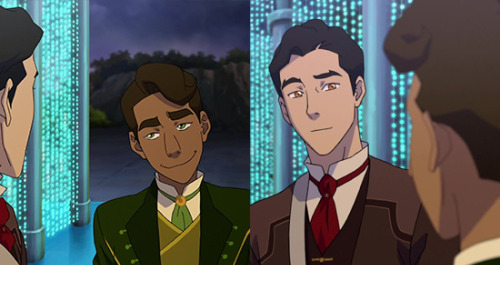


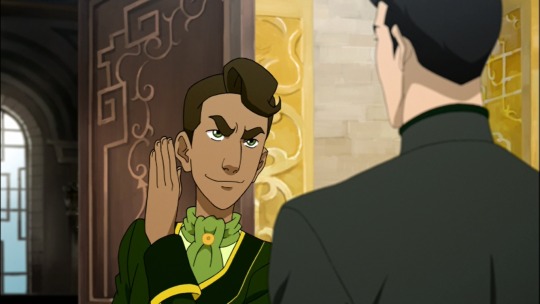

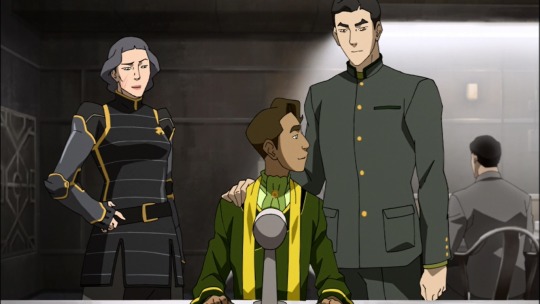


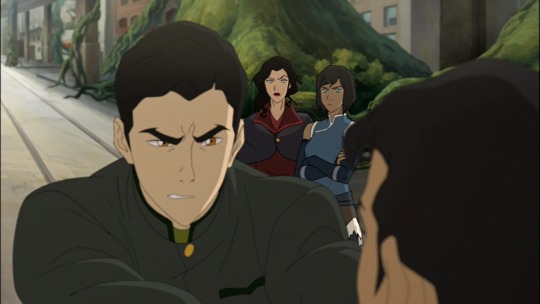

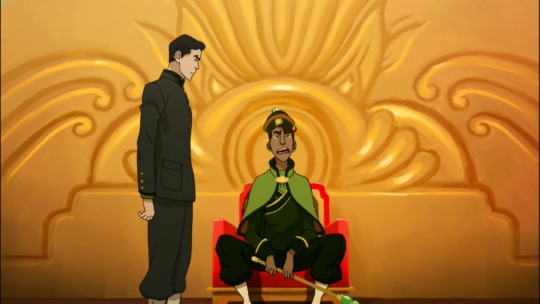
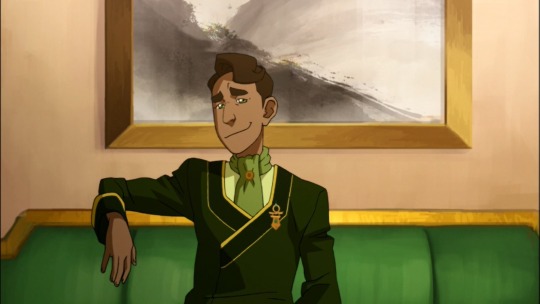
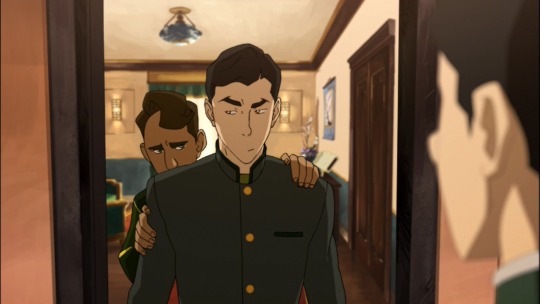


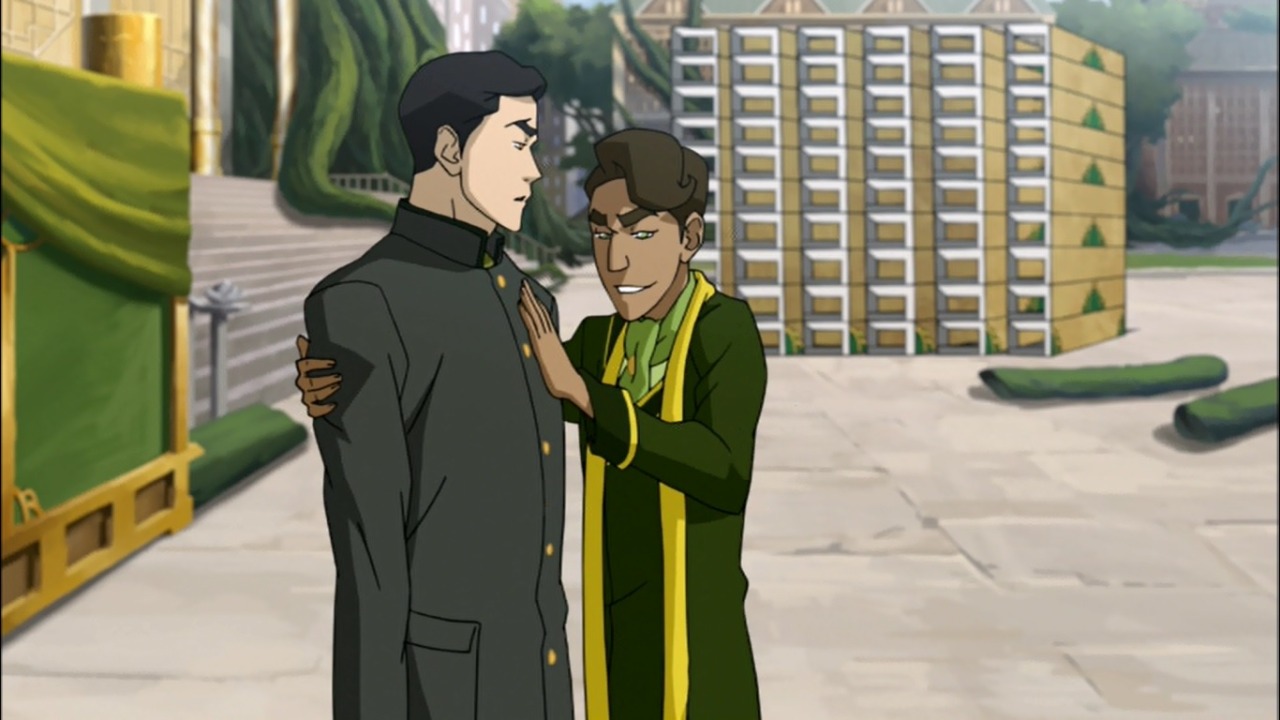
 Gascon-en-exil: Gallophilic Cultural Posturing